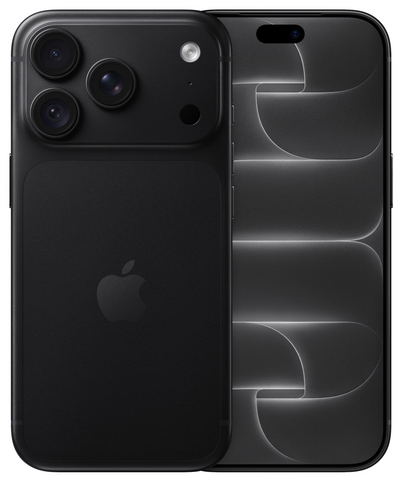
An iPhone at a great price sounds good. Until you find yourself among dozens of providers, wondering what you're actually getting. Those looking to buy a refurbished iPhone aren't just looking for a discount. Above all, you want the certainty that your device works well, is delivered quickly, and won't cause any hassle after a few weeks.
That is precisely the difference between just second-hand and professionally refurbished. A used iPhone from a private individual can be fine, but it often remains a gamble. With refurbished, it’s all about checking, testing, and clear terms and conditions. That makes it attractive to anyone who wants an Apple product without paying the top price.
Why buying a refurbished iPhone is so popular
New iPhones are powerful, fast, and popular, but also expensive. Especially if you don't want to spend thousands of euros on the latest model, refurbished becomes attractive. You still get iOS, the familiar camera experience, FaceTime, AirDrop, and access to the Apple ecosystem, but at a much lower price.
For many buyers, that is the best middle ground. You don't automatically sacrifice much in terms of user experience, but you do save a significant amount. Older models like the iPhone SE, iPhone 11, or iPhone 12 are still more than fast enough for daily use. Do you make many calls, use social media, take photos, stream videos, and work on the go? Then you don’t always need the latest model.
There is another factor at play. Refurbished appeals to buyers who want to shop smarter. Not because being cheap is the only goal, but because value counts. Why pay full price when a professionally checked device can handle the same daily usage?
What refurbished really means
The term "refurbished" is sometimes used too loosely, which leads to confusion. Not every used iPhone is refurbished, and not every refurbished iPhone is processed to the same standard.
A high-quality refurbished device is first technically checked, tested on key components, and repaired where necessary. Think of the battery, camera, speakers, microphone, touchscreen, buttons, charging port, and connectivity. At a specialist, this is done according to a fixed quality control process. That is precisely why certification and a testing process are important.
If a provider clearly communicates a 52-point check, a certified refurbishment process, 2-year warranty, and 30-day returns, you know that risk is actively being mitigated. That is not a detail. That is the foundation of trust.
What to look for when buying a refurbished iPhone
Price is often the first thing you notice, but it should never be the only thing you look at. A lower price without a clear warranty or technical check can end up being more expensive in the long run.
Start with the condition of the device. Many providers work with conditions such as like-new, lightly used, or visibly used. This usually refers to the appearance, not necessarily the technology. A device with a small scratch can be technically perfect. For many buyers, that is a smart way to save even more.
Next, look at the battery. This is one of the most important parts of your user experience. An iPhone can look great, but if the battery is weak, you will notice it every day. Always check whether the battery has been tested and what you can expect in terms of performance.
Warranty is the next filter. A short or vague warranty says a lot. A provider that truly stands behind its quality dares to offer a longer warranty. The same goes for the return period. If you want to take your time to assess whether the device is right for you, a 30-day return policy is a strong reassurance.
Finally, delivery time matters. If your current phone is broken or barely works, you don't want to wait endlessly. Fast delivery makes the difference between convenient and frustrating.
Which model fits your usage
Not everyone needs the same iPhone. That sounds logical, but in practice, many people pay too much. The smartest model is not always the newest one, but the model that fits how you actually use your phone.
Do you mainly use WhatsApp, email, banking, Spotify, and some social media? Then you will often be perfectly fine with an iPhone SE, iPhone 11, or iPhone 12. For students, families, and budget-conscious buyers, these are often the models with the best price-quality ratio.
If you want a better camera, longer battery life, and a more modern screen, you will soon end up with an iPhone 13, 14, or 15. These are often strong all-round choices for people who use their phone more intensively for work, photos, and videos.
If you are looking for premium performance, for example for photography, content creation, or simply because you want the best without paying the new price, then Pro models are interesting. Think of more recent lines like the iPhone 16 Pro or iPhone 17 Pro Max. They remain more expensive, but it is precisely there that the price difference with new devices is most noticeable with refurbished models.
It therefore depends on your priorities. Budget, camera, screen size, and battery are usually more important than just the model year.
Refurbished versus second-hand
The biggest misunderstanding is that refurbished and second-hand are about the same. They are not.
When buying second-hand, you usually buy directly from a previous owner. Often without a technical check, without a fixed warranty, and without a clear return policy. Sometimes that goes well. Sometimes you buy hidden wear and tear, a mediocre battery, or components that no longer function optimally.
With refurbished, you buy with extra certainty. The device has been tested, cleaned, checked, and offered under conditions that are often missing in standard second-hand sales. You notice that difference not just at the time of purchase, but especially if something turns out to be wrong. You don't want an argument; you want a solution.
For many consumers, that is exactly why a specialist feels safer than a marketplace model. You might pay slightly more than for a private deal, but you are buying peace of mind.
Why specialist inspection makes the difference
An iPhone is not just any product. It is a device you use every day for work, contact, navigation, photos, payments, and entertainment. In that case, you don't want to rely on vague product descriptions or general electronics retailers that sell everything from laptops to kitchen appliances.
A specialist in refurbished iPhones understands what buyers really look for. Not just price, but battery health, model selection, condition of the device, and long-term reliability. This makes the purchasing process easier.
At Refurbished.nu, it’s all about exactly that combination of benefit and certainty. You aren't just buying a used iPhone, but a certified device that has been checked on dozens of points, comes with a 2-year warranty, and can be at your door quickly. That makes the step toward refurbished much easier.
Is cheap always smart?
No. Sometimes the absolute lowest price is a signal to be extra cautious. If an offer is significantly below the market average, the question is not only how much you save, but also what you might be missing.
Perhaps the battery is less strong. Perhaps a thorough check is missing. Perhaps the warranty is limited or you have to sort everything out yourself in case of problems. Then "cheap" suddenly becomes less attractive.
Buying smart therefore doesn't mean blindly choosing the lowest price. It means weighing price against quality, terms, and trust. Especially with a device you use daily, that is a much better way to compare.
For whom refurbished is the best choice
Refurbished is especially interesting if you do want an iPhone but aren't tied to "new in the box." This applies to students looking for an affordable device, parents who want a reliable iPhone for their child, professionals who need a good work phone, and anyone who simply wants to shop smartly without compromising on certainty.
Sustainable buyers also often end up here. Using a device longer or putting it back into circulation is simply a smarter choice than buying new unnecessarily. That benefit is a nice bonus, as long as the quality is right. That is why certification remains so important.
How to make the right choice
Don't start with the latest model, but with your usage. Ask yourself what you really need. How important are the camera, screen size, and battery? Do you mainly want the lowest price, or would you prefer a newer model that will last longer?
Only then look at the provider. Is it clearly explained how the device was tested? Is there a warranty? Is there a return period? Do you know what the condition means? Can you count on fast delivery? If those basics are correct, the rest becomes much simpler.
Buying a refurbished iPhone doesn't have to be a source of doubt. Not if you choose a device that fits your usage and a provider that makes quality visible. Then saving doesn't feel like a compromise, but simply as a smart purchase that you can enjoy as early as tomorrow.