A broken iPhone, a device that is becoming too slow, or simply a new model that suits you better: you often want to make a quick choice without paying more than necessary. Anyone searching for iPhone refurbished pros and cons primarily wants to know if saving money can truly be done safely. The short answer is: yes, provided you buy from a specialist that is transparent about testing, condition, battery, and warranty.
A refurbished iPhone is not the same as a random second-hand iPhone from a private seller. The device is technically checked, cleaned, and repaired where necessary in advance. That provides more certainty, but it remains important to look at exactly what you are buying. Not every device has the same cosmetic condition, storage capacity, or battery status.
Why choose a refurbished iPhone?
The main reason is usually the price. A refurbished iPhone often costs significantly less than a new device, while you can still choose from iPhone models that will work well for years to come. That makes refurbished an attractive option for students, families, and anyone looking for a reliable device without paying top dollar.
Saving money does not automatically mean you have to compromise on ease of use. For messaging, navigation, banking, photos, video calling, and daily tasks, a well-chosen refurbished iPhone can still be excellent. However, it is wise not to look at the model alone. Storage space, screen size, and battery are at least as decisive for your future satisfaction.
You make a more informed choice than with private second-hand purchases
With a private second-hand purchase, you often do not know what a device has been through. Was it dropped before? Does the charging port work properly? How quickly does the battery drain? And what do you do if a problem arises after a few days?
With refurbished, a device is checked before it is offered. At Refurbished.nu, you also receive a 24-month warranty and 30 days for returns. That difference is decisive for many buyers: you are not just buying an iPhone, but also the breathing room to check if it suits you.
Less waste, without complicated choices
Using an iPhone for longer is often a sensible choice when you do not need a new model. A device that is still technically sound gets a second life instead of being left unused. That is a pleasant additional benefit, but it does not have to be the only reason to choose refurbished. For most people, price, reliability, and fast delivery weigh the heaviest.
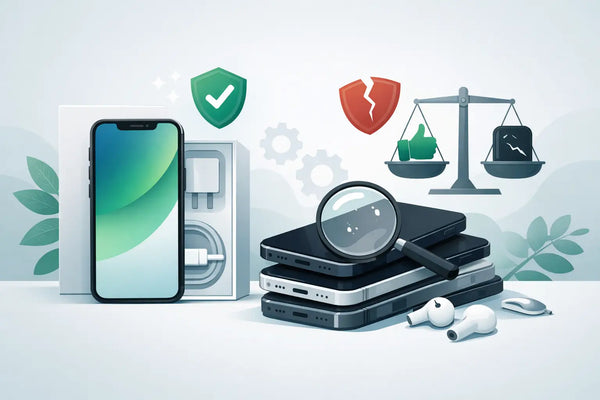
iPhone refurbished pros and cons honestly weighed
The advantages are clear: you pay less, choose from different price brackets, and buy with more certainty than with a private seller. You can also often choose a better model within the same budget. While a new entry-level model might just be within reach, refurbished can provide room for more storage or a larger screen.
However, there are also disadvantages. Refurbished is not a synonym for brand new. A device may have signs of use, depending on the chosen condition. Anyone expecting an iPhone without visible marks should therefore read carefully which condition is being offered. A light scratch on the casing does not affect performance, but it may be important if you highly value an appearance that is as new as possible.
The battery also deserves attention. Batteries wear out due to usage and age. Therefore, it is wise to check in advance how the provider handles the battery and what you can expect. Do not expect every refurbished iPhone to achieve the exact same battery life as a new device straight out of the box. For most daily use, a well-checked battery is more than sufficient, but anyone filming, gaming, or navigating intensively all day has different requirements than someone who mainly makes calls and sends messages.
Another point is availability. With refurbished, the supply depends on the devices that become available and pass the inspection. As a result, not every color, storage variant, or condition is always in stock. Anyone with a specific model in mind would do well to be flexible regarding color or cosmetic condition.
What should you look for before ordering?
Start with your own usage. A compact model is convenient if you mainly want to operate your iPhone with one hand and carry it easily in your pocket. If you watch a lot of videos, work on the go, or want to better assess larger photos, a larger screen might be more pleasant. The best device is not necessarily the newest or most expensive model, but the model that fits how you use your iPhone every day.
Then think about storage space. For calling, chatting, streaming music, and a limited number of photos, a lower storage capacity might be enough. If you take many photos and videos, keep downloads, or use large apps, extra storage will prevent you from having to clean up soon. A lower purchase price is nice, but too little storage can become annoying later on.
Next, read the condition description carefully. Condition usually refers to the appearance of the device, such as potential signs of use on the screen or casing. It does not mean that a device with visible marks works any less well. This is precisely why a clear separation between technical inspection and cosmetic condition is so important. This allows you to make an informed choice: maximum savings or a device that looks as neat as possible.
Finally, check the practical terms and conditions. How long is the warranty? Are you allowed to return the device if you are not satisfied? How is it delivered, and who can you contact if you have questions? These points might seem less exciting than the price, but they determine how much risk you are actually taking. A low price without clear service is something different than a sharp price with clear conditions.
When is refurbished less suitable?
A refurbished iPhone is not for everyone. If you insist on having the very latest model immediately after launch, unopened packaging, or zero signs of use, buying new probably aligns better with your wishes. You pay for that, of course.
It is also wise to compare if you have very specific technical requirements. Someone who professionally produces large video files, works all day on the go without charging options, or needs a lot of storage should look extra critically at the model, storage, and battery. Refurbished can still be a good choice, but not every device fits that intensive way of working.
For a temporary solution, refurbished is particularly logical. Do you need a replacement iPhone quickly because your current device is broken? Then you primarily want a device that works well, is clearly priced, and is delivered without hassle. A carefully checked refurbished model often offers more peace of mind than quickly arranging an unknown second-hand iPhone.
How to make the choice without surprises
First, choose a budget and then determine what is non-negotiable for you. Perhaps that is a large screen, enough storage for photos, or a casing that looks as neat as possible. Only then compare models. This prevents you from solely chasing the lowest price only to discover later that you actually needed a larger storage variant.
Also, be realistic about the appearance. A device in a less pristine condition can be technically fine and save you a significant amount. If you use a case anyway, light marks on the casing are often barely noticeable. If you want to use your iPhone without a case or are giving it as a gift, a neater condition might be the better choice.
The question is therefore not just whether refurbished is cheaper. The better question is whether you are getting enough certainty, performance, and ease of use for your budget. With a clearly checked device, a good description, and a 2-year warranty, you can confidently choose an iPhone that will last a long time in your daily life.